
Pairs well with this story
How do you read an ingredient label?
Read a Korean cosmetic ingredient label in two parts: the ingredient name and the formulation purpose. The ingredient name identifies the raw material or ingredient. The purpose describes a role such as moisturizing, skin conditioning, or film forming.
If an ingredient is not included in the product name, do not assume that it is included in the formula. Check the full ingredient list on the package or product page. The examples here explain general label reading.
First check the Korean or English ingredient name. Then compare the Japanese cosmetic name, formulation purpose, and place in the routine.
Check the ingredient name and purpose
PDRN(polydeoxyribonucleotide/moisturizing ingredient)is one abbreviation seen in Korean cosmetics. Do not rely on the abbreviation alone. Confirm the full name and the formulation purpose together.
Hyaluronic acid(moisturizing ingredient)is listed for a moisture-retaining purpose. Ceramide(moisturizing ingredient)is listed for a purpose related to maintaining moisture.
Panthenol(moisturizing ingredient)is a name used for a moisturizing purpose. Adenosine(skin-conditioning ingredient)is listed for a skin-conditioning purpose.
These are examples for explaining how to read ingredient names. They do not confirm that the three products introduced here contain these ingredients.
Ingredient names are often highlighted in Korean cosmetic product names and promotional descriptions. Confirm the stated purpose and read the information within the scope of cosmetic labeling.
Compare Korean and Japanese ingredient names
Korean products may use English or Korean ingredient names. Japanese cosmetic ingredient lists use Japanese names, so the wording may change between markets.
For example, 「히알루론산」corresponds to hyaluronic acid in Japanese cosmetic labeling. 「세라마이드」corresponds to ceramide. Comparing the Korean term with the Japanese label helps clarify that they refer to the same ingredient.
「판테놀」corresponds to panthenol, and 「아데노신」corresponds to adenosine. Check both the Korean term and the Japanese label instead of relying only on pronunciation.
| Korean label | Japanese label | Formulation purpose |
|---|---|---|
| PDRN | Polydeoxyribonucleotide | Moisturizing ingredient |
| 히알루론산 | Hyaluronic acid | Moisturizing ingredient |
| 세라마이드 | Ceramide | Moisturizing ingredient |
| 판테놀 | Panthenol | Moisturizing ingredient |
| 아데노신 | Adenosine | Skin-conditioning ingredient |
When an ingredient name appears in a product name, that name can be identified from the product title. The amount and order of all ingredients must still be checked on the product label.
Check the order and product examples
In general, morning care starts with cleansing, followed by toner or another skincare step. Lotion or cream may follow according to the product directions. Sun-care products are used after skincare and before makeup.
In the evening, remove makeup and sun-care products before cleansing and skincare. Follow the directions printed on the product for amount and frequency.
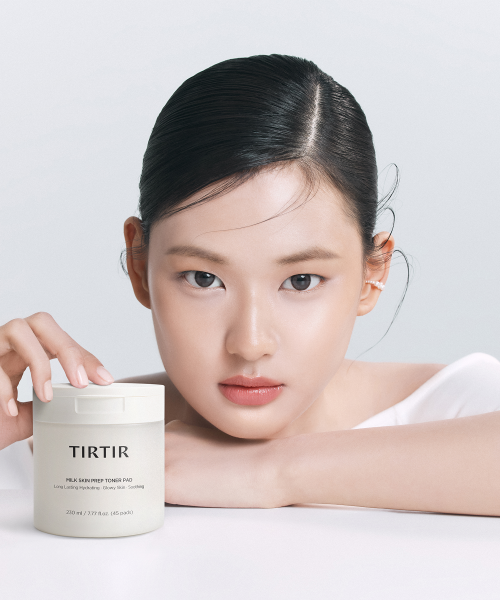
- In the morning, use a toner pad or similar skincare step after cleansing, following the product directions.
- If you use toner or lotion, check the order printed on each product.
- After sun-care, move on to makeup such as primer or foundation.
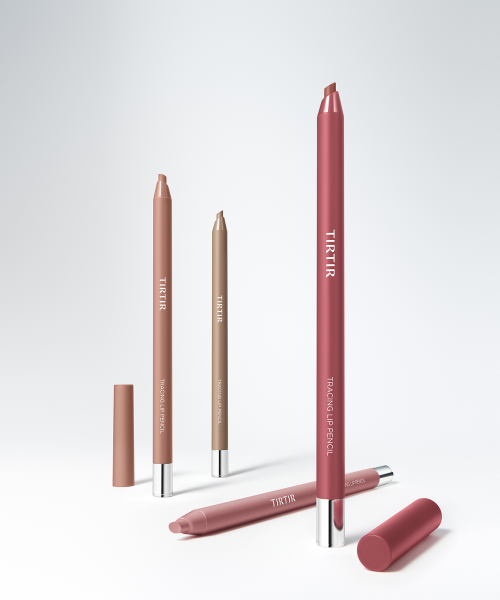
- Use a lip pencil at the lip-makeup step when defining the lip outline.
- In the evening, remove makeup and sun-care products before following the skincare directions.
The product names below indicate these general positions in a routine. For products without a stated volume, check the package or product page.
| Product | Volume | Place in routine |
|---|---|---|
| Reflect Glow Prep Primer | Check the product label | After sun-care and before makeup |
| [2PACK] Tracing Lip Pencil 8 types(choose 2) | Check the product label | Lip-makeup outline step |
| [Makeup Wear Cooling Calming] Milk Skin Prep Toner Pad | Check the product label | Skincare step after cleansing |
“2PACK” indicates a two-item set. “8 types(choose 2)” indicates that two items are selected from eight types. This describes the set contents, not the ingredients or frequency of use.
Notes
For a cosmetic used for the first time, perform a patch test on an area such as the inner arm with a small amount. Follow the product directions for the area and method.
If redness, swelling, itching, or irritation appears during use, stop using the product. If the condition continues, consult a qualified professional.
Do not decide the amount or frequency from the ingredient name alone. Follow the directions printed on the product for amount and frequency.
Frequently asked questions
How should I read a product without an ingredient in its name?
Do not assume that an ingredient is included when it does not appear in the product name. Check the full ingredient list and compare the formal name with its formulation purpose. The examples in this article explain general label reading.
Can I simply translate a Korean ingredient name into Japanese?
Check the Japanese cosmetic label as well as the translated Korean term. The same ingredient may use different wording in each market, so confirm the formal name and formulation purpose together.
At what step should I use a toner pad?
A toner pad is generally used after cleansing during the skincare step. For a TIRTIR toner pad, follow the order printed on the product. Follow the directions printed on the product for amount and frequency.
Should primer or sun-care come first?
In general, use sun-care after skincare and then move to makeup products such as primer. If the product gives different instructions, follow the order shown on its label.
Summary
- Separate the ingredient name from its formulation purpose.
- Compare Korean wording with the Japanese cosmetic label.
- Follow the directions printed on the product for amount and frequency.
- Check the routine position of toner pads, primer, and lip pencils.